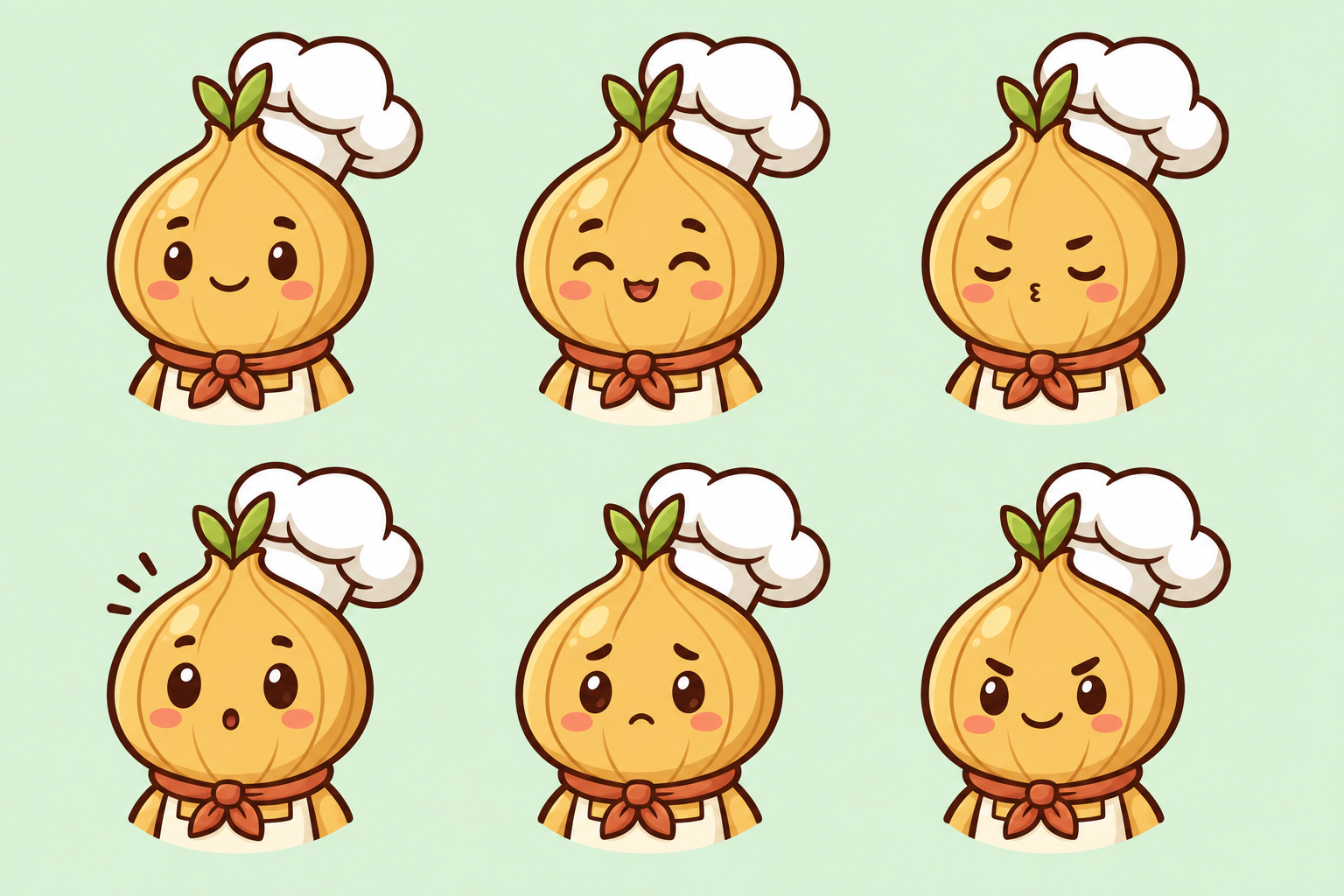
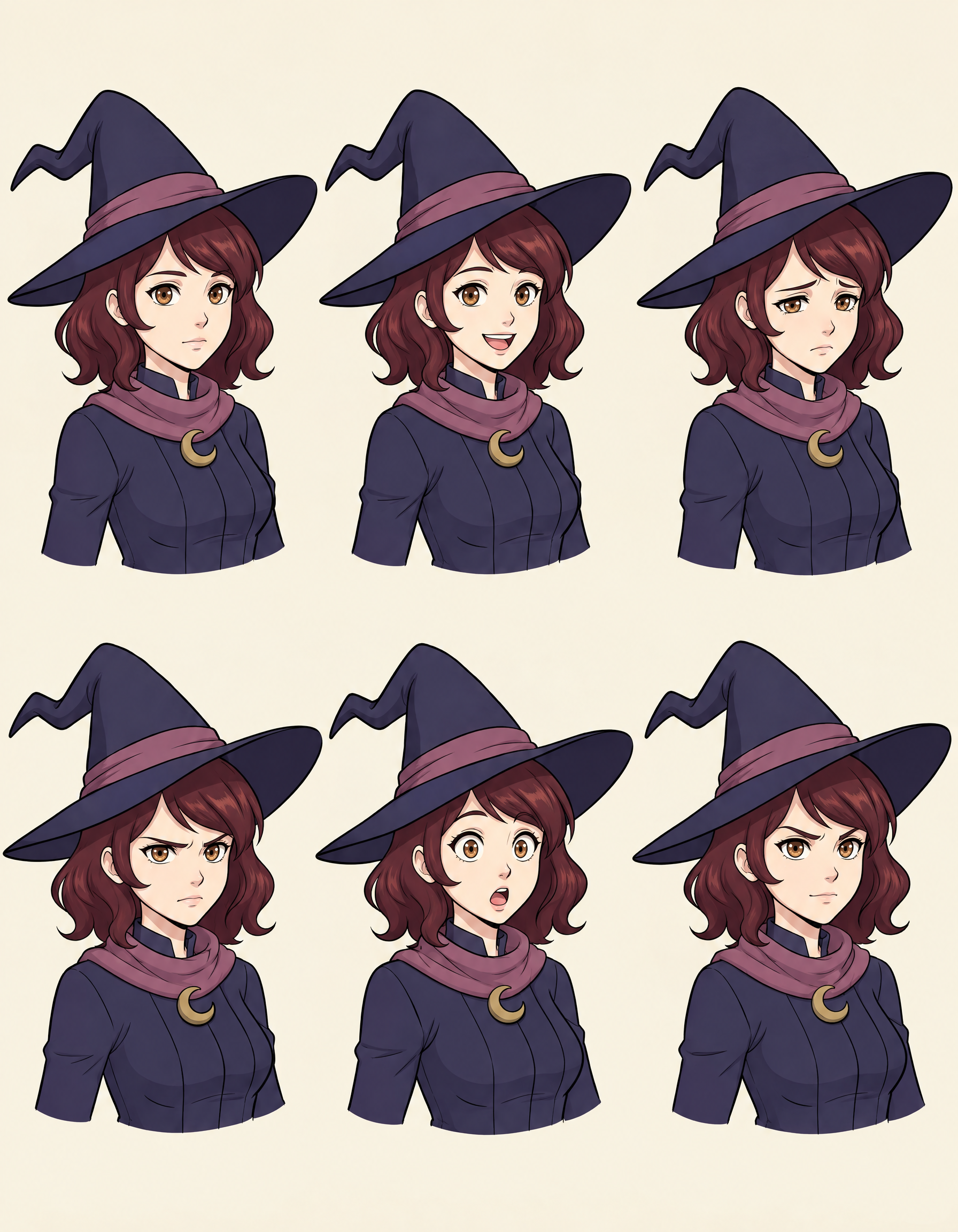
By the third chapter of a visual novel, the heroine's eyes have changed shape twice and her hat has lost its crook, because each expression was drawn on its own. Players notice a face that drifts long before they notice anything else.
Name the character and, if you like, the moods. "A young witch with a pointed hat: neutral, happy, sad, angry, surprised and determined" is enough. Layer draws the whole set on one sheet from one design, so you are not re-describing her hair in every request and checking six images against each other.
Hold the Face, Move the Mood
The head carries most of what makes a character recognizable, which is why face drift is the first consistency failure players spot. On the sheet, only the expression is free. Face shape, hair, outfit, accessories and palette are locked, and for a character that does not exist yet, Layer settles the design before it draws any mood.
Choosing the Six
The default set covers what most dialogue needs: neutral, happy, sad, angry, surprised and determined. Swap in your own when the character calls for it. A cooking-game mascot sells warmth, so the onion chef gets welcoming, delighted and focused instead of angry. When the script needs embarrassed or smug later, ask for another row and it follows the same face.
Cut It Into Portraits
Cut the panels into portrait sprites for your dialogue system, or hand the sheet to your animators as the reference for the face. For the full body from every side, see turnaround sheets.