“Paint a Norse coastal fishing village for my survival game as a game location concept.”
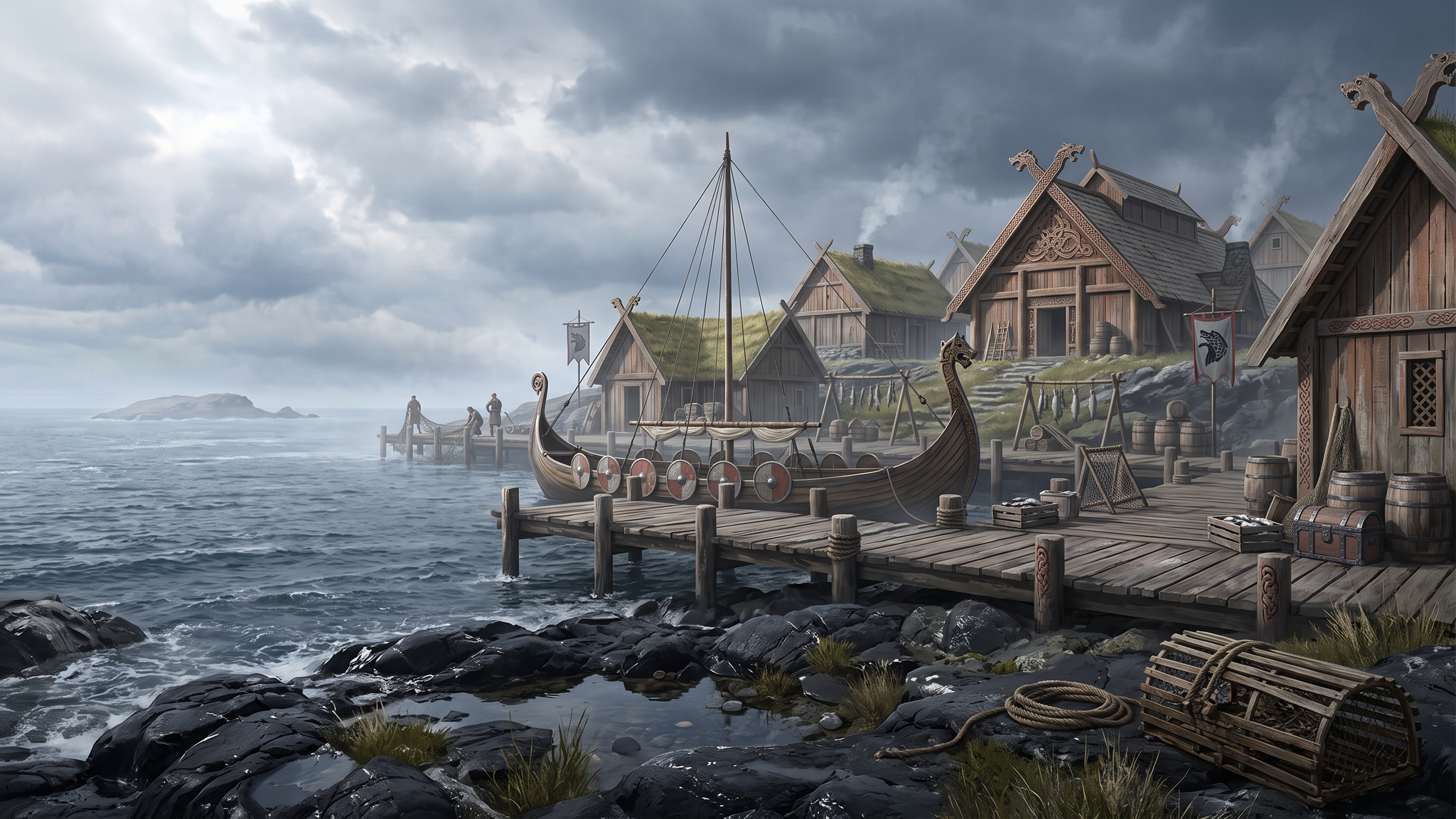
Turf roofs, carved gable finials and fish-drying racks place it as a Norse fishing village at a glance, and the storm sky suits a survival game.
AI Game Location Generator
Name the place in your game, and the architecture, props and weather that belong there come with it
“Paint a Norse coastal fishing village for my survival game as a game location concept.”
Turf roofs, carved gable finials and fish-drying racks place it as a Norse fishing village at a glance, and the storm sky suits a survival game.
“Paint a feudal-Japanese mountain shrine for my action adventure game as a game location concept.”
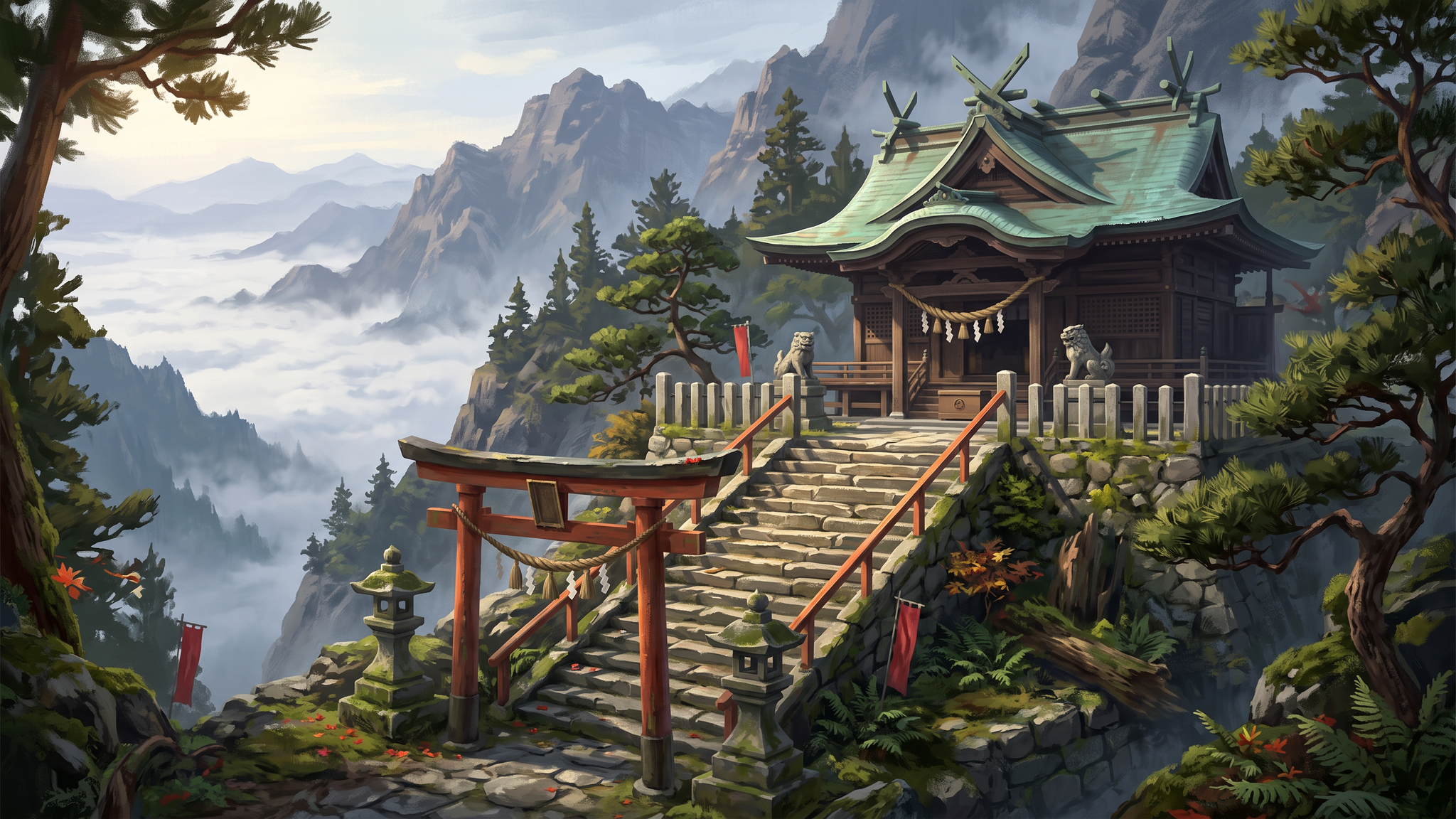
The palette stays in slate and cedar so that crimson belongs to the torii and the banners, the sacred focal points. The long stair gives the level a climb to design around.
Players should know where they are before the first enemy moves. Ask for "a fantasy village" and you get every village at once: thatch beside stone towers beside paper lanterns, and a level with no sense of place.
Type the place the way you would say it to your art lead, such as a Norse coastal fishing village for a survival game. Layer settles the landscape, the culture and era, and what the place is for, then paints a location where each roof, prop and plant answers to all three. You skip the reference hunt and the list of things that must not appear.
A location reads as one place when the land, the people and the purpose agree. The Norse village gets turf roofs and a longship, and it never gets a stone cathedral, a cobbled plaza or a pagoda. A coast gets salt grass and open water, never the dense forest of an inland valley.
Purpose decides what fills the rest. A settlement needs signs of daily life, like drying racks, smoke and a working pier. A sacred place stays muted and saves one saturated color for what is holy, which is why the shrine keeps its crimson for the torii. A ruin shows time through collapse and moss, and loses the fresh paint.
Ask for the village, the shrine above it and the ruin down the coast in the same conversation, and they come back in one style, so the map feels like one world. Change the weather or the season to see how a place holds up before a level designer commits to it.
Each location downloads as a high-resolution PNG for your level designers, your art team or a pitch deck. Routes show in the painting, like the shrine's long stair, so the blockout has something to follow. For a whole decade's look, see retro era game art. For the ground your players walk on, see game tile sets.
Build a 1980s mall arcade level or a set of 1950s diner props where every object belongs to its decade. Name the era and the place, and Layer fills the frame.
Tile Sets With Every Edge and Corner on One GridName your terrains and get a tile atlas with fills, edges, corners and transitions on one grid, or a tactical battle map with cover and high ground.
AI Environment Art with LayerGenerate environment art and world concepts 10x faster with AI. Landscapes, interiors, props, and biomes for games and film. 300+ models, PSD export.
A place and the game it is for. "A Norse coastal fishing village for my survival game" is a complete request. Layer works out the rest and paints only what fits.
Layer picks the rest and tells you what it chose, so you can redirect. A ruin alone could be a jungle temple or a moorland abbey, and naming the landscape and the culture gets you the one you mean.
Yes. Ask for the village at dawn or the shrine under snow in the same conversation, and compare the versions against the level you are planning.
Yes. Ask for the aspect ratio your game uses, such as an ultra-wide strip for a side-scroller. It arrives as one flat painting, so ask separately if you need parallax layers. For a character or creature standing in the scene, see [concept art](/use-cases/concept-art).
Create a free Layer account and name the first place in your game.