Skip to content

AI Tile Set Generator

Tile Sets With Every Edge and Corner on One Grid

Name the terrains and get the pieces a map is painted from, or ask for a battle map with its tactics laid in

What do you want to create?

Log in to unlock more features

Attachments, projects, reference sets and voice are part of your workspace.

Messages to send, and what they made

“Make a tile set for my top-down farming game: grass, dirt path, water and stone, with the edge tiles where they meet.”

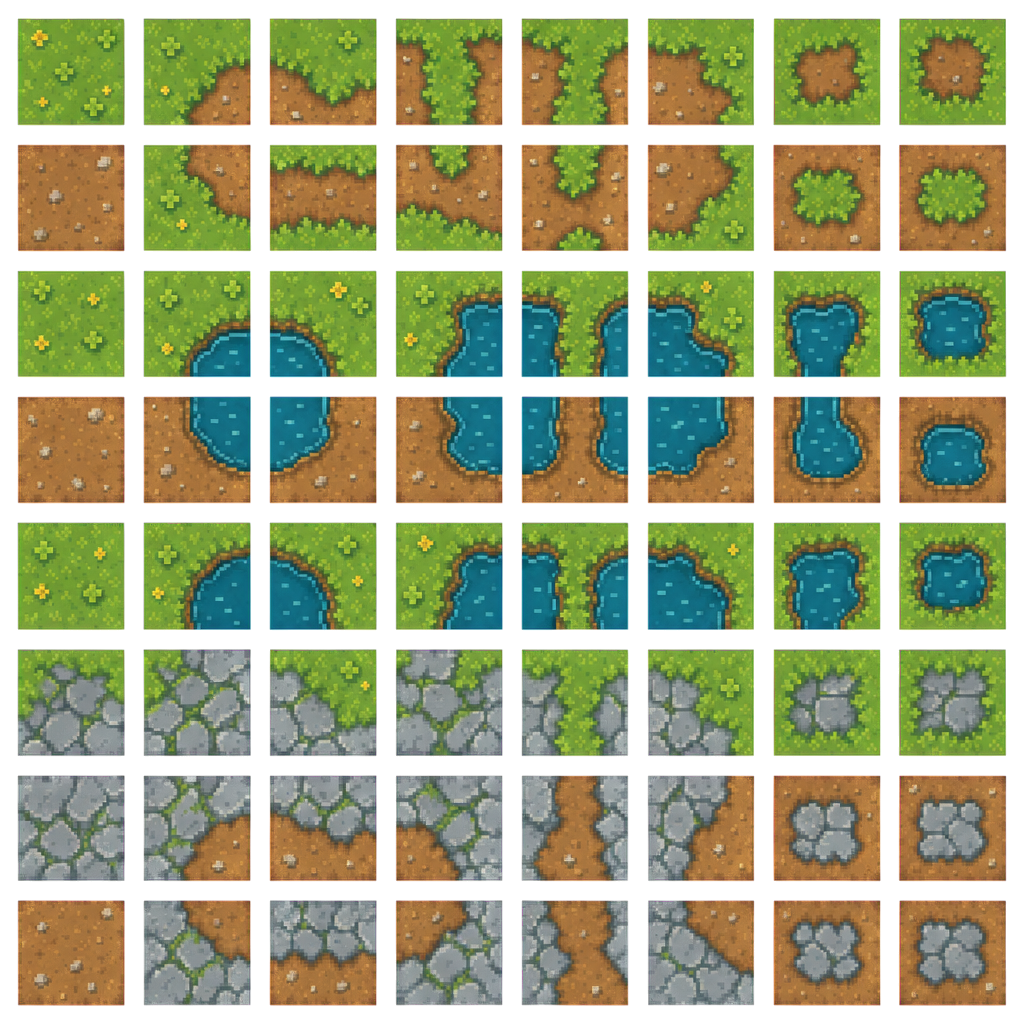
An eight by eight atlas of pixel-art terrain tiles covering grass, dirt, water and stone, with edges, corners, banks and transitions between them
64 tiles on transparent gutters

Each terrain has its fill, and the edges, corners, shorelines and transitions each sit in their own cell behind clean gutters, so the atlas slices on a grid.

“Make a tactical battle map for my strategy RPG: a river crossing with a stone bridge, a forest edge and a hill, on a square grid.”

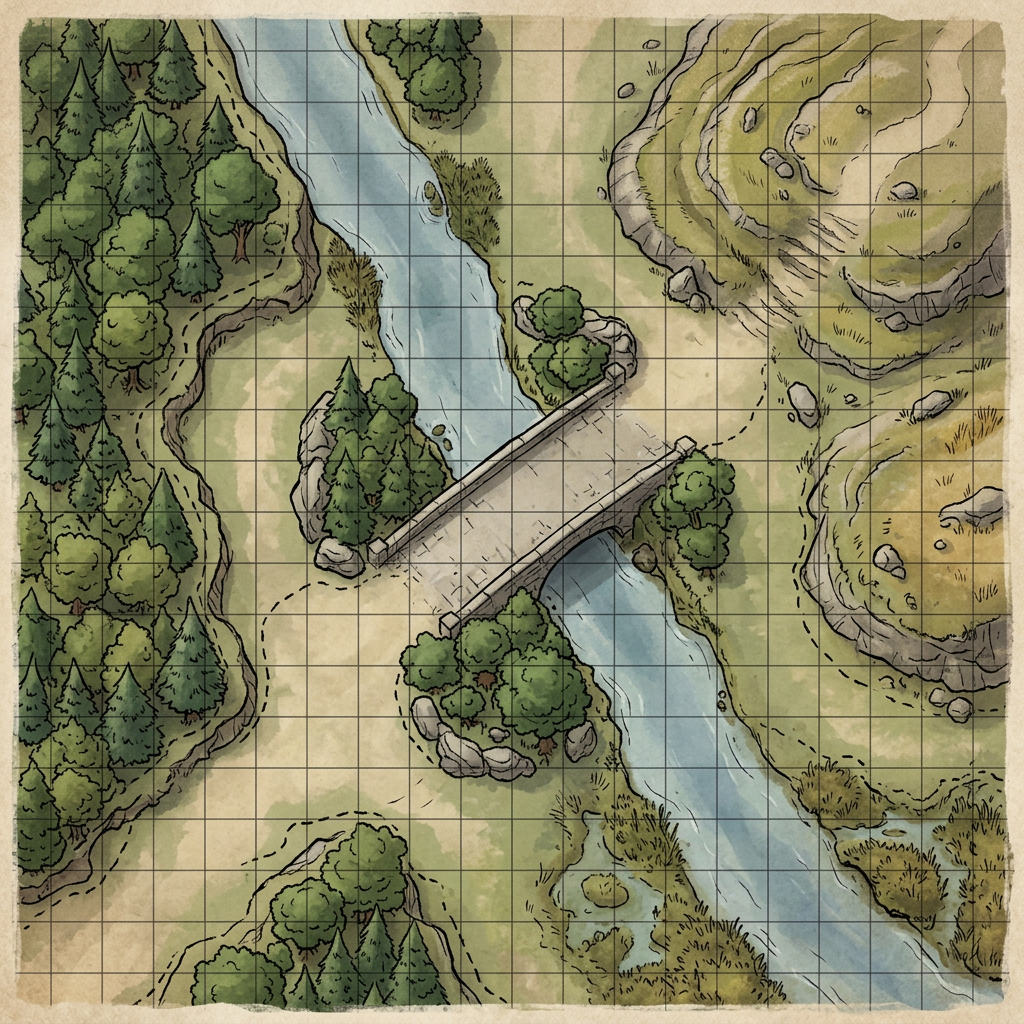
A top-down hand-drawn battle map on a square grid, with a river crossed by a stone bridge, a pine forest on the left and terraced hills on the right
The battle map

The stone bridge is the chokepoint at the center, the pines on the left give cover and the terraced hill gives high ground, all on a square grid.

A level designer paints a shoreline and hits a gap: the set has water, grass and a straight bank, and nothing for the spot where the shore turns inward. Tile sets fail on the pieces nobody listed, and listing them is tedious work before anyone draws a pixel.

Type the terrains your game uses, such as grass, dirt path, water and stone for a farming game. Layer works out the piece list a map built from them needs and draws the whole set in one style on one grid.

The Piece List Nobody Wants to Write

Every terrain needs a fill. Every place two terrains meet needs straight edges, outer corners and inner corners, and the inner corner is the one that goes missing. The count climbs with each pair: four terrains that can all touch make six borders to cover. Name the pairs your maps use and the set is planned around them.

Cells on a fixed grid Every tile sits in its own cell with transparent gutters around it, so a grid slice cuts the sheet cleanly.

Room to grow Sand, snow or lava added later follows the style of the tiles you already have.

Battle Maps Where the Terrain Picks the Fight

A tactical map works when the ground gives players decisions. Ask for a river crossing and the bridge becomes the chokepoint, the forest edge becomes cover and the hill becomes high ground. Push placeholder units around it before any unit art exists, and ask for a variant, such as a ford or a winter crossing, when the first map plays too narrow.

Slicing and Filtering

Slice the atlas in Unity's Tile Palette, Godot's TileSet or Tiled, then paint a test patch that hits every corner before building a level on it. For pixel art, set Filter Mode to Point in Unity or Nearest in Godot so the tiles stay sharp.

For the locations above ground, see game location design. For pixel art built to real console hardware, see pixel art.
Game Tile Sets — FAQ

Will the tiles line up?+

They are designed to. Edges and corners are drawn to meet, and every tile sits in its own cell. Paint a test patch in your engine before you build a level on the set, because some joins can need a pixel or two of touch-up in your editor.

Which pieces are in a set?+

A fill for each terrain, the straight edges, the outer and inner corners, and transitions where two terrains meet, such as a dirt path into grass. Name the pairs your maps use, and the piece list is planned around them.

Is it laid out for my engine's autotile rules?+

No. The atlas holds the pieces on a uniform grid, not in the order a particular autotile template expects, so you assign tiles to your engine's terrain rules yourself.

Can I choose the style?+

Yes. Name it, such as cozy pixel art, a retro console look or hand-painted. Without one, Layer picks a style that suits the game you describe.

Can I add terrains later?+

Yes. Ask for sand, snow or lava in the same conversation, and the new tiles follow the style of the set you have.

What makes a battle map worth playtesting?+

Terrain that changes the fight. Layer puts a chokepoint, cover and high ground where they shape movement, so placeholder units have real choices from the first test. Ask for a ford instead of a bridge and you can compare both crossings.

Paint levels without missing a corner

Create a free Layer account and name the terrains your maps need.