Skip to content

AI 3D Model from Multiple Views

3D Models Built from Four Views, Back Included

Describe the design, and Layer draws the front, left, back and right before it builds any geometry

What do you want to create?

Log in to unlock more features

Attachments, projects, reference sets and voice are part of your workspace.

Messages to send, and what they made

“Design a sci-fi scout robot for my game, draw its front, left, back and right views, then build the 3D model from all four views with Tripo 3.1.”

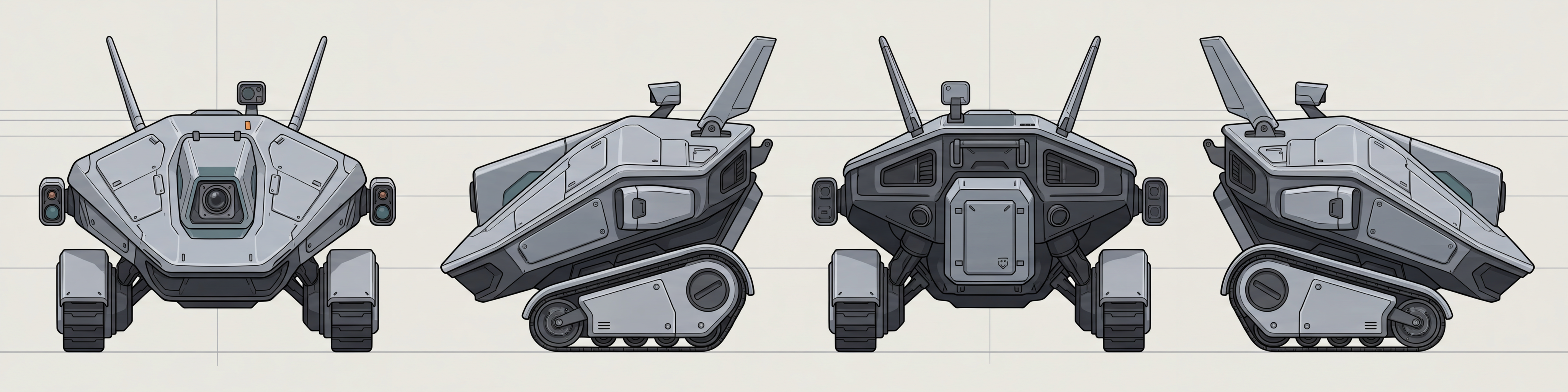
A four-view turnaround of a wedge-bodied scout robot on treads, front, left, back and right
The four views
Turntable of the delivered model

The wedge body and the treads agree in all four views, and the turntable shows the same robot from behind as from the front, because every side of the model was drawn before it was built.

A model built from a single image gets the front right and makes up the back. For a robot with a sensor pack or a character with a quiver, that invented back is the part your modeler ends up redoing.

Write what the thing is, the way you would brief a concept artist. Layer draws the front, left, back and right, checks that the four agree, and builds the model from all of them with Tripo 3.1. You never crop a sheet into views or sort out which image is which side.

Four Drawings Before Any Geometry

The turnaround decides the model, so Layer draws it on shared guides: the shoulder line, the deck height and the top of the head sit at the same place in every view. It then gives the model each view as its own image, labeled with the side it shows.

What Makes a Turnaround Buildable

Views that agree When one view has wheels and another has treads, Layer asks which to keep and redraws before building.

Detail on the back, drawn rather than guessed A pack, a tail or a vent on the back comes from the back view.

A neutral pose for characters Keep arms clear of the body, since an action pose bakes into the mesh and sleeves fuse to whatever they touch.

After the Build

Download GLB, OBJ or FBX for Unity, Unreal, Godot or Blender. See image to 3D for the models behind it. To change a detail, edit the views and rebuild from the corrected sheet, so the drawing and the model stay in step.

To add a skeleton, see rigging 3D models. For full material sets, see PBR 3D models.
3D Models from Four Views — FAQ

Why four views instead of one image?+

Because one image leaves the model guessing. A single front view says nothing about the back, so the model invents it. With front, left, back and right, the back of the model comes from a drawing you have seen.

Do I have to draw the turnaround myself?+

No. Describe the design and Layer draws a matched turnaround first, then builds from it. If you already have views, attach them. Either way, Layer hands the 3D model each view as its own image, so it reads four sides of one design rather than one figure with extra limbs.

What if the views disagree?+

Layer checks the sheet before it builds. If one view shows wheels and another shows treads, it asks which to keep and redraws the sheet, so the mismatch never reaches the geometry.

Which designs are hardest to build?+

Loose and thin parts. Long capes, ribbons, fine chains and thin straps tend to come back as webbing or holes, so keep them short or pinned to the body. Anything worn on the back needs the back view to survive.

What format are the files?+

GLB with textures, which Unreal, Godot and Blender open directly, and Unity reads through its glTFast package. Download as OBJ or FBX from Layer.

Describe it once, see it from every side

Create a free Layer account and describe the design you want to turn in 3D.